Scholarship
Historical literacy, reflection, and disciplined understanding give practice depth and direction. The scholar learns to interpret tradition carefully, question responsibly, and connect ideas to conduct.
 Munmudo AcademyScholar. Warrior. Leader.Return to the Academy
The Mun Ji Kwan Canon · Book I
A Constitutional Philosophy of Martial Education
Publication information forthcoming.
The Foundational Question
“What kind of person should be entrusted with strength?”
Book I begins with the premise that martial education is never merely technical. The cultivation of power must be joined to judgment, restraint, understanding, and responsibility.
The question reaches beyond individual conduct. It asks what a school should reward, what rank should mean, how instructors should exercise authority, and what obligations arise when one person becomes capable of protecting, teaching, or leading another.
It also asks how an institution can make those commitments visible. A philosophy becomes credible when it shapes everyday correction, partner care, promotion decisions, the conduct expected of senior students, and the limits instructors place on their own authority.
About the Work
The opening volume establishes the philosophical and institutional foundation of the Mun Ji Kwan project.
It presents strength governed by wisdom, rank understood as responsibility, and martial education directed toward the formation of capable, thoughtful, and honorable people.
Its constitutional approach is deliberate. Before a school determines what to teach, it must determine what its teaching is meant to produce. Book I therefore considers the relationship among technical standards, moral formation, legitimate authority, tradition, practical relevance, and service.
The work situates Mun Ji Kwan as a respectful curriculum doctrine and pedagogical method. It does not claim to replace established Taekwondo authorities, recognized organizations, or historic lineages. Instead, it seeks a coherent way to preserve their contributions while answering the developmental needs of contemporary students.
Historical literacy, reflection, and disciplined understanding give practice depth and direction. The scholar learns to interpret tradition carefully, question responsibly, and connect ideas to conduct.
Fundamentals, application, poomsae, sparring, and self-defense keep philosophy embodied. The warrior develops effective technique while learning control, proportion, adaptability, and the costs of force.
Restraint, service, teaching, and transmission make rank a responsibility rather than a status. The leader protects standards, supports others, and accepts accountability for how knowledge is carried forward.
The Constitutional Lens
Book I uses the word constitutional to describe principles that stand beneath individual lessons and give the school a stable moral and educational direction.
A constitution does more than list techniques. It clarifies what authority is for, what limits should govern it, what advancement should recognize, and what responsibilities belong to students, instructors, and senior practitioners.
This lens connects ideals to institutional choices. If rank signifies responsibility, promotion must examine more than memory. If strength must be governed, sparring and self-defense must develop judgment as well as effectiveness. If leadership is service, seniority must increase accountability rather than privilege.
The result is not a rigid script for every class. It is a coherent standard against which curriculum, teaching decisions, ceremonies, testing, and school culture can be examined.
A Guide for Serious Readers
Book I is intended to operate at several levels. It offers a philosophical argument about the purpose of martial education, a constitutional standard for examining institutional choices, and an invitation to serious dialogue among practitioners, instructors, scholars, and families.
The work provides language for examining how technique, self-command, rank, and responsibility should mature together across a lifetime of training.
It asks whether teaching methods, testing practices, authority, and school culture reinforce the same declared human purpose.
It offers a framework for continuity: principles that can guide decisions even as individual lessons, leaders, and circumstances change.
What capacities, habits, and forms of judgment should mature through long-term martial practice?
How can curriculum, promotion, authority, and culture reinforce the same educational purpose?
How should inherited knowledge be studied, tested, preserved, and transmitted without becoming static?
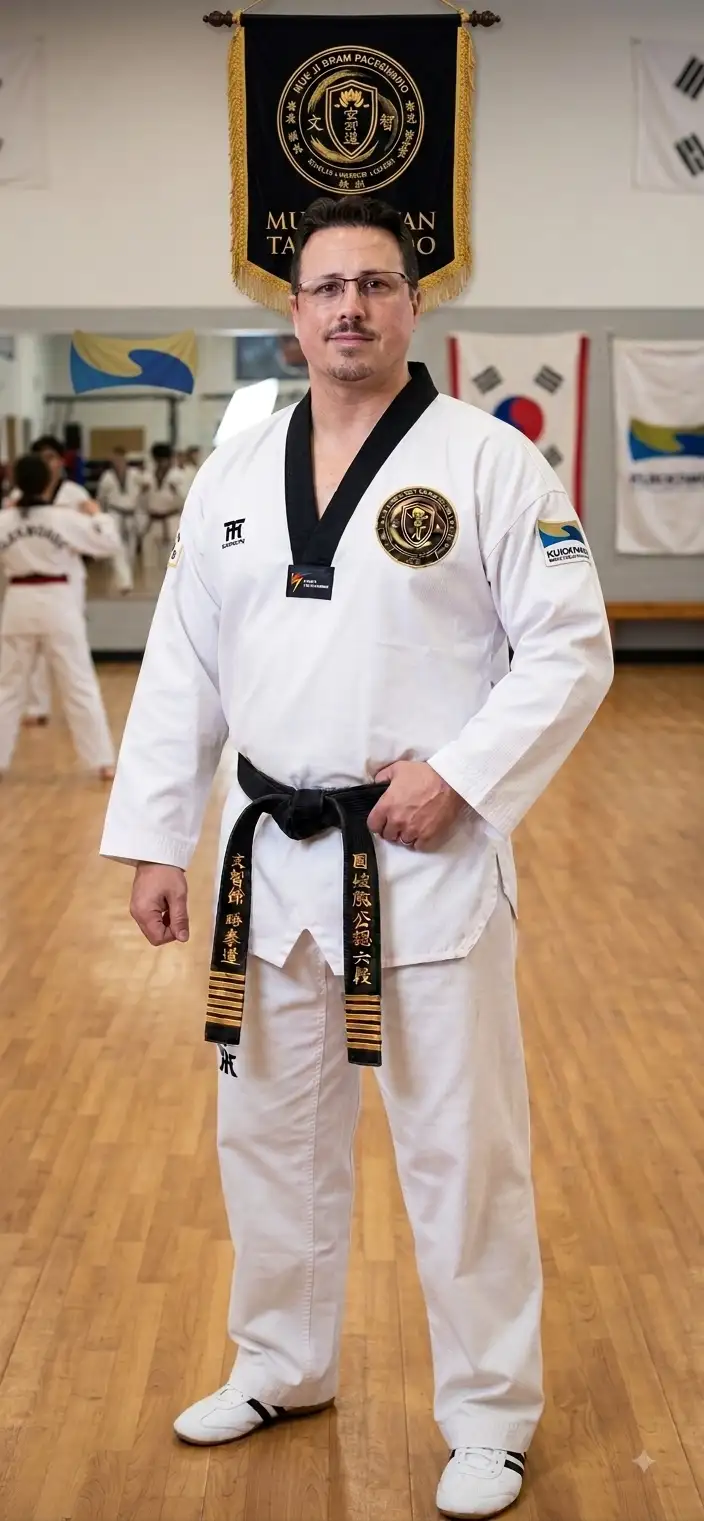
Author
Miguel Thomas Gonzalez is the founder of Munmudo Academy and author of The Mun Ji Kwan Canon. His work develops an integrated martial education centered on scholarship, technical discipline, ethical responsibility, and service-minded leadership.
The argument grows from more than four decades of Taekwondo practice and from sustained attention to what training carries across childhood, competition, teaching, family life, adversity, and renewal. The resulting perspective treats martial education as a long human formation rather than a temporary sequence of techniques.
He presents the project for serious review and dialogue, with respect for the institutions, masters, and lineages that have carried Taekwondo forward.
Read the founder profile →The Larger Work
Foundations of the Martial Way establishes the constitutional premise from which the broader written project proceeds. The Canon overview explains how the work relates to Munmudo Academy, Mun Ji Kwan Taekwondo, and the protected curriculum.
Explore The Mun Ji Kwan Canon →